The short answer
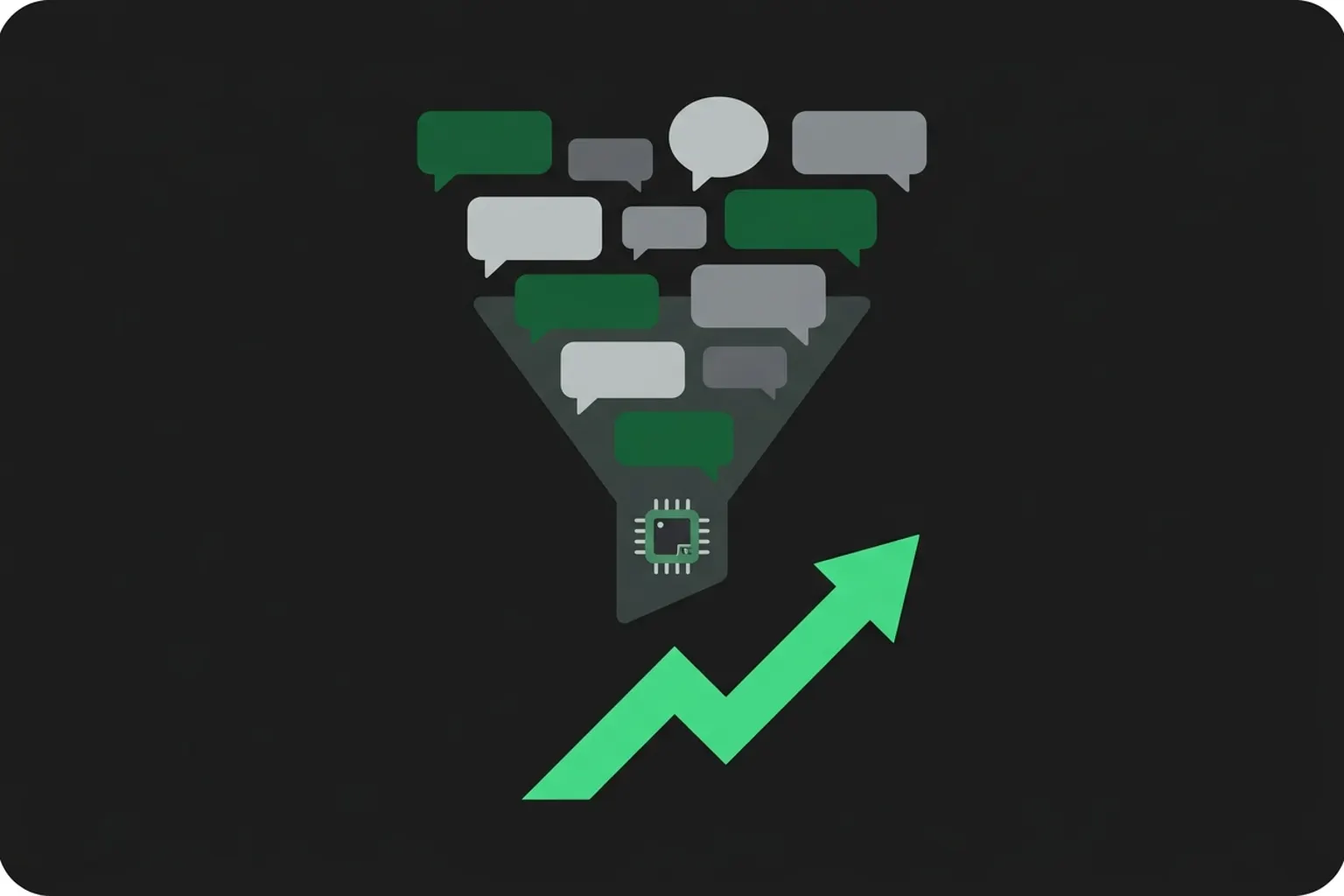
AI increases sales in three places, and we can put a number on each. Instant response to new leads. One client of ours cut first replies from 24 hours to under 2 minutes and conversion rose 40% on the same leads. Follow-up that never forgets, because most sales need several nudges and human reps quietly stop after one or two. And qualification, so your closers only talk to people ready to buy. Costs run from about US$14 a month for DIY chat tools, to S$690 a month for a managed AI agent, to S$25,000 for a custom build. And AI does not fix a bad offer. If buyers said no to your price last month, a machine repeating that price faster will get the same no, just sooner. Start with the lever your funnel leaks from most.
Last updated: July 25, 2026. Every client result and price on this page comes from what we publish on 41labs.ai, read July 2026.
Where does AI actually increase sales?
Three levers. Everything on this page hangs off them.
The first is speed to the inbound lead. A real-estate agency we work with was taking about 24 hours to answer new enquiries, which is normal for a stretched team and quietly brutal on revenue, since a buyer who messages three companies buys from the one that answers. We put an AI agent on their WhatsApp line. First replies now go out in under 2 minutes at any hour, and conversion rose 40% on the same leads and the same ad spend. Nothing else changed. Not the offer, not the pricing. Just the reply speed. We broke down why this one lever moves so much money in our speed to lead guide.
Source: 41 Labs client result, a Singapore real-estate agency, as published on our AI sales agent pages and case study, July 2026. One client in one industry, so treat the 40% as that client's number. The response-time drop is the part that repeats across deployments.
The second lever is follow-up, and it leaks more revenue than most owners believe because it never shows up on a dashboard. A buyer asks for a price. You send it. They go quiet. In most sales teams that thread dies right there, because the rep has 30 open conversations and the quiet ones sink to the bottom. An AI agent has no bottom of the list. It nudges on day 2, answers the late question at 11pm on day 5, and keeps the thread warm until the buyer decides either way. The strongest number we publish comes from a live 41 Closer deployment, an industrial supplier running over $300,000 a month in sales through the agent, quoting live from 42,000 products. 64.1% of the chats it handles end in a sale. A big share of those sales came from threads a human team would have written off as dead.
The third lever is qualification. Before AI, every enquiry cost a human the same ten minutes, whether it was a serious buyer or someone comparing prices for fun. An agent asks about budget, timeline, and what the buyer actually needs, then quotes from your real price list. Your closers stop wading through tyre kickers. They pick up conversations that are already warm, with the buyer's answers attached. Same team, more closes, because human hours land on hot leads instead of cold ones.
Where is AI in sales pure hype?
Now the part most vendors leave out of the webinar.
AI-written cold email blasts. The pitch says one person can now send 10,000 personalised emails a month. Reply rates on this have collapsed, because every inbox gets twenty of these a day and mail providers have learned the pattern. When a burnt sending domain lands in spam, your real emails go with it. And there is a simpler problem underneath the deliverability one. If your cold email did not work at 50 a week, sending 5,000 a week automates the failure and adds a software bill.
The autonomous "AI SDR" that books meetings while you sleep is the same idea in a nicer suit. Demos look great. Live, the bot pattern-matches its way into conversations it does not understand, prospects notice within two messages, and the meetings that do get booked are thin. We have watched teams celebrate a full calendar and then close nothing from it. There is a version of this that works, and it is inbound. An agent answering people who already messaged you plays on easy mode compared with one interrupting strangers.
Sentiment analysis dashboards round out the set. Software that scores your calls and announces a deal is 68% likely to close, with a mood graph. We have yet to meet a team that changed one behaviour because of a mood graph. The score moves, everyone nods, and the deal closes or dies for the same reasons it always did. Call recordings reviewed by a sales manager are genuinely useful for coaching. The theatrical layer on top is decoration.
All three sell activity. Emails sent, dashboards filled. Revenue lives in the three levers above, and a tool that cannot draw a straight line to reply speed, follow-up, or qualification is probably overhead wearing a sales costume.
How to use AI in sales, step by step
Step 1. Measure your first-reply time this week. Take your last 20 inbound enquiries and check the timestamps. Enquiry in, first human reply out. Most owners guess minutes and find hours. That single number is your baseline and your business case, and the research says it decides more than any tool choice you make afterwards.
Source: InsideSales.com Lead Response Management study, which found the odds of reaching a new lead fall more than tenfold after the first five minutes, and Harvard Business Review lead response research, which found companies contacting a lead within one hour were nearly 7 times more likely to qualify it. Bars show relative odds, indexed to the slower reply.
Step 2. Put AI at the top of the funnel, on one channel. The channel your buyers actually use to reach you, whether that is WhatsApp, a website form, Instagram, or a phone line. Resist wiring AI into all of them at once. One channel gives you a clean before-and-after read, and the top of the funnel is where speed matters most, so it is where the money shows up first.
Step 3. Load real answers, then let it qualify. Your actual prices, delivery times, and the 20 questions buyers ask every week. An agent that says "someone will get back to you" is a receptionist with extra steps. One that quotes a real price and asks about budget and timeline is doing sales work. If you want the plumbing behind this, we wrote a plain-English walkthrough of how AI agents work.
Step 4. Switch on follow-up and set the handoff rule. Quiet lead gets a nudge at day 2 and day 5. Complex or upset buyers get handed to a human with the full chat history attached, every time. The agent takes the 2am enquiry and the fifth follow-up nobody on your team enjoys sending. Your people take the negotiation.
Step 5. Measure close rate, and nothing else. Enquiry-to-sale percentage, before and after, over at least a month. Messages sent, response rates, and "engagement" are activity numbers, and the hype tools in the section above all look wonderful on activity numbers. If close rate did not move, the tool did not work, whatever the dashboard says.
What AI sales tools exist?
Four honest categories. Most products on the market fit one of them, whatever the branding claims.
CRM copilots. The AI inside Salesforce, HubSpot, and their peers. Drafts follow-up emails, summarises deals, fills in the record fields reps hate filling. These make your sellers faster and they never speak to a buyer. If your leak is admin time eating selling hours, start here. But when the leak is leads going cold overnight, a copilot will not touch it.
Outreach tools. Sequencers that write and send cold email and LinkedIn messages at volume. Some are well built. This is still the category where most of the hype section above lives, so hold any outreach tool to the close-rate test before you scale spend on it.
Conversation intelligence. Tools that record, transcribe, and analyse sales calls. Useful for coaching a team of ten reps toward what your best rep does. They improve the humans. They sell nothing by themselves, so buy them for the coaching loop or skip them.
Managed AI closers. An agent that talks to your buyers directly. It replies in seconds, qualifies, quotes from your price list, follows up, and either closes in the chat or hands a hot lead to a human. This is the category we build in. Our 41 Closer is a managed WhatsApp agent, built and run by our team, live in about 48 hours, and on its strongest deployment 64.1% of the chats it handles end in a sale. We explain the whole category, including when you do not need one, in what is a digital salesperson.
Which category deserves your money depends entirely on where the funnel leaks. Pull 20 lost leads, find where each one stalled, and you will know which of the four to pay for.
What does AI for sales cost?
Bands we can price from our own published pages, plus one we can only bracket.
DIY chat and inbox tools run about US$14 to US$79 a month. ManyChat starts at US$14 and respond.io at US$79, with most tools in between, plus per-message fees on WhatsApp. Your team builds the flows, writes the answers, and owns the results. Cheap to try. The hidden cost is the operator hours, and the graveyard of abandoned chatbots is full of tools nobody owned.
CRM copilots and conversation intelligence are priced per seat, with the sticker public on each vendor's site. Budget the seat fee times your team size, then read the usage caps in the fine print before you multiply.
Managed AI closers are priced as a service. Our 41 Closer starts at S$690 a month plus a one-time build fee from S$4,800, handling up to 350 chats a month. The Pro plan at S$1,490 a month takes payment inside the chat and handles up to 1,000. We are a Singapore company delivering in Singapore and Australia, and what we publish for each market sits on our Singapore and Australia pages. The bands translate to any country. The currencies just shift.
Custom builds run S$7,000 to S$25,000 per project. Quoting engines, sales systems wired into your inventory, agents that need to do something no off-the-shelf tool does. Worth it when the process you are fixing costs more per year than the build, and not before. More on AI quote automation.
Whichever band fits, do the maths on the other side of the ledger first. Take your average sale value, count the enquiries that went quiet last month, and multiply. That figure is what slow response and dropped follow-up already cost you. For most businesses we audit it is several times the cost of any tool on this page, which is the only reason this industry exists.
Frequently asked questions
How is AI used in sales?
In most sales teams it does one of four jobs. It answers new enquiries within seconds instead of hours, it follows up with quiet leads until they decide, it qualifies buyers by asking about budget and timeline before a human gets involved, and it handles the admin around selling, drafting emails and updating the CRM. The first three touch revenue directly. The fourth saves time. A real-estate client of ours put an AI agent on lead response alone and conversion rose 40% with no change to leads or ad spend, which is why we tell most businesses to start there.
Can AI actually close deals?
Yes, with conditions. On our strongest live deployment, a 41 Closer agent selling for an industrial supplier, 64.1% of the chats it handles end in a sale, quoting live from a catalogue of 42,000 products. The conditions matter. The agent needs your real prices, guardrails on what it can promise, and a human to take over the tricky conversations. It closes transactional and mid-ticket sales well. A six-month enterprise deal with four stakeholders still closes over calls and meetings, and there the AI's job is keeping every thread warm between them.
What is the best AI for sales?
The one pointed at the place your funnel leaks. If enquiries wait hours for a first reply, you want a conversational agent on the channel your buyers use. Reps drowning in admin need a CRM copilot instead. And when deals keep dying on calls, conversation intelligence will show you why. Asking which tool is best before finding the leak is how companies end up with five subscriptions and the same close rate. Pull 20 recent lost leads and look at where each one stalled. The category picks itself after that.
Will AI replace salespeople?
It replaces parts of the job, mostly the parts salespeople do badly at 11pm. Instant response, remembering to follow up, answering the same twenty questions, chasing quiet threads. That work moves to software. Reading a room, negotiating a large deal, and building the relationship that gets a renewal signed stay human. Salespeople who pair with AI get more at-bats, because the machine keeps every lead warm until one is worth a human's hour. Across our client base, team size stays flat and close volume goes up.
How do I start using AI in my sales process?
Measure your first-reply time on the last 20 enquiries, because that number decides everything after it. If it is hours, put an AI agent on your busiest inbound channel first, loaded with your real prices and your 20 most common questions, with follow-up switched on and a clean handoff to a human for complex deals. Run it for a month and compare enquiry-to-sale rate against your baseline, not messages sent. DIY tools cost about US$14 to US$79 a month. A managed agent like ours starts at S$690 a month. Both cost less than the leads currently going quiet.
See one close before you buy anything
Message +65 8012 4848 on WhatsApp with what you sell and roughly how many enquiries you get a month. The agent that replies is one of our live production systems, so you are watching the product do the job before anyone asks you to pay. If the honest answer for your business is a US$14 tool and tighter follow-up habits, that is the answer you will get.