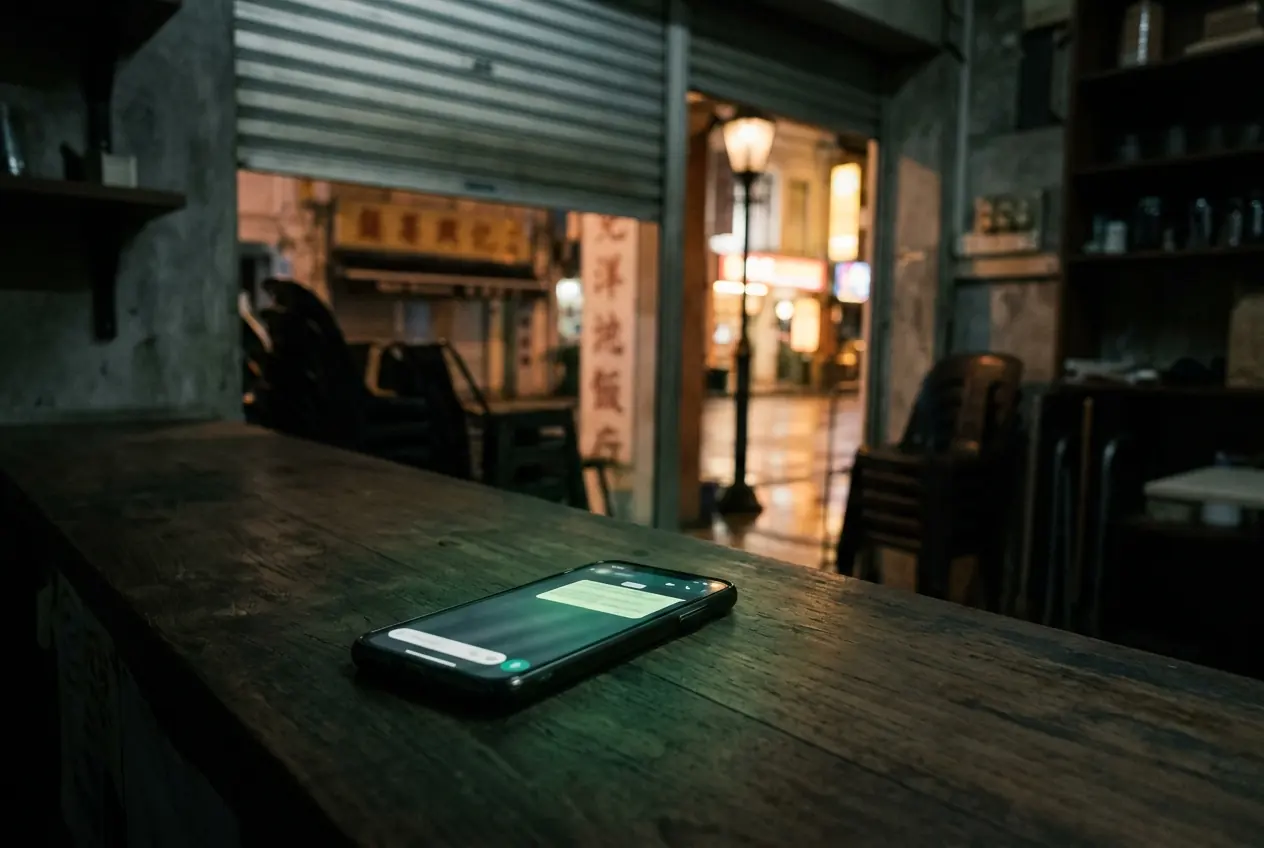
Between 2026-07-24 and 2026-08-24 we sent one genuine buying enquiry to 25 Singapore businesses over WhatsApp. Real questions about real products, from a real phone number, all sent between 8pm and 11pm. Then we waited and timed who answered.
One business replied within five minutes. The median wait was 13.3 hours. Fourteen of the 25 answered somewhere between twelve and twenty-four hours later, which in practice means the next working morning. Two took more than a day, the slowest 13 days. And 4 never produced a human reply at all: 3 sent an automated acknowledgement and nothing more, 1 said nothing ever.
What we actually did
Each business got a single message written as a customer would write it, specific to what they sell. One asked about a king size mattress and whether old mattress removal was included. Another asked about delivery. No follow-ups from us, no second nudge. We recorded the timestamp of the first reply from a human, and separately counted automated messages so an auto-responder could not be mistaken for service.
The businesses were drawn from our own prospect list of Singapore SMEs that publish a WhatsApp number and sell considered-purchase products. They are not a random sample of Singapore business, and we have not named them. The point is the pattern, not any one company.
Why the evening matters more than the number
Every enquiry went out between 8pm and 11pm, so a 13-hour median is largely the sound of a message waiting for someone to open the laptop. That is the finding, not a flaw in it. Evening is when people shop. It is when someone finally sits down after work and messages three suppliers about the thing they have been meaning to buy.
The question this data answers is narrow and useful: if a buying enquiry lands at 9pm, what happens to it? For 24 of these 25 businesses, the answer is nothing until tomorrow. For 4 of them, the answer is nothing at all.
Whoever replies first while the buyer is still choosing has an advantage that no amount of pricing or positioning recovers later. That is the whole argument for speed to lead, and this is what it looks like measured on the ground rather than quoted from a study.
The auto-responder problem
Three businesses sent an instant automated message and then went quiet. In the timing data they look responsive. To the customer they are worse than silence, because an acknowledgement sets an expectation the business then fails. If you run one, check what happens after it fires.
What we would want before trusting this further
Honest limits. 25 businesses is a small sample. Every enquiry went out in the evening on a Friday or a Monday, so we cannot say anything about weekday-daytime response, and weekends are untested. Each business received exactly one message, so this measures first response and nothing about whether the eventual reply was any good. A larger sample across times of day would tell us more, and we intend to run one.
What we would not walk back: the gap between the fastest business and the median is not marginal. It is five minutes against thirteen hours, from the same channel, on the same evenings.
What to do with this if you run one of these businesses
Time your own. Ask a friend to message your WhatsApp at 9pm tonight with a real question and note when a human answers. It takes twenty minutes and the number is usually worse than the owner expects.
Then decide whether it matters. If evening enquiries are a small part of your volume, it does not. If they are how most of your customers first reach you, an unanswered 9pm message is a lead you paid to acquire and then dropped. That is the gap our managed WhatsApp agent exists to close, and it is also the gap a staffed evening shift closes. The tool matters less than deciding the hour is worth covering.
Frequently asked questions
How fast do Singapore businesses reply to WhatsApp enquiries?
In our sample of 25 Singapore businesses messaged in the evening, the median time to a human reply was 13.3 hours. Only one replied within five minutes. Fourteen replied between twelve and twenty-four hours later, which is the next working morning, and 4 never sent a human reply at all. This measures evening enquiries specifically, sent between 8pm and 11pm on two weekdays in 2026-07 and 2026-08 2026. Daytime response is likely faster and we have not measured it.
What is a good WhatsApp response time for a business?
Under five minutes while the buyer is still comparing options. That is not an arbitrary target: it is the window in which someone messaging three suppliers has not yet heard back from the other two. In our data exactly one business of 25 hit it. Anything inside an hour still puts you ahead of most of this sample. Once you pass the next morning, you are no longer competing on service, you are hoping the customer has not bought elsewhere.
Do WhatsApp auto-responders count as replying?
No, and they can be worse than silence. Three businesses in this study sent an instant automated acknowledgement and then never followed up. The auto-reply makes the business look responsive in any timing measurement while leaving the customer with a promise nobody kept. If you use one, make sure something happens after it fires.
How did 41 Labs collect this data?
We sent one genuine buying enquiry to each of 25 Singapore businesses over WhatsApp from a real phone number, between 8pm and 11pm on two weekdays between 2026-07-24 and 2026-08-24 2026. Each message was written as a customer would write it and specific to what that business sells. We sent no follow-ups. We recorded the timestamp of the first human reply and counted automated messages separately. Businesses came from our own Singapore SME prospect list, not a random sample, and are not named.